
Home > Implementation for Educators Blog
From Access to Action: How to create a system for using data effectively

We often say we are “data-rich,” yet many implementers still struggle to use that data to make informed decisions and take effective action. While a Decision Support Data System (DSDS) provides the technical infrastructure to support best practices, simply having a system in place is not enough. The real question is, are we using these systems effectively to improve outcomes? Intentional routines and protocols can either strengthen or limit the impact of data use during implementation. This blog aims to help readers understand how to build an effective system.
The Importance of Consistent Processes
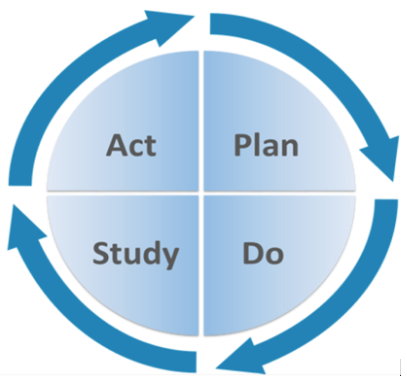
Effective data-based decision-making requires foresight and long-term planning. Consistency is essential. While data should always guide implementation, teams must also plan how they will use that data to make decisions. Access to data is only the starting point. True improvement comes from how consistently and effectively that data is used. Just like any skill, growth requires repetition and structure. When building a consistent process, implementers should clearly ask the following questions. Who is responsible for data collection and use? What data is being collected? When is data collected and reviewed? Finally, they should ask why the data matters. Strong systems rely on clear, repeatable practices. These may include structured routines or formal improvement models such as Plan-Do-Study-Act (PDSA) cycles.
Whatever approach is selected, the process must be easily understood, teachable and trainable, and practical and sustainable. If a system is overly complex or difficult to follow, it will not be used effectively. The goal is to build capacity so that all team members, not just leadership, can confidently engage in data-based decision-making. The goal is to create an inclusive process for all.
Ensuring High-Quality Data
Before using data, we must first ensure that it is of good quality. We must collect the right data. Create a system where data is entered accurately. The data must be accessible to the right people at the right time. This supports the question of who? Whose role is to input data.
For example, an office discipline referral (ODR) form may be completed differently by different staff members, leading to inconsistent or unreliable data. To address this, organizations must train staff on how to complete forms correctly. The organization should establish a clear data entry procedure. There must also be clearly set expectations for timely data submission.
Data Access
Access to data is another important consideration. Data access is crucial. Not everyone needs access to all data. Instead, access should align with roles. Administrators will have access to all school-wide data. School improvement teams should have access to relevant program or content-area data. Grade-level chairs can access grade-level specific data. Teachers should have access to their students’ data. Clearly defining rights access allows for data to be used within a system and allows for bi-directional communication.
At the same time, organizations must address the challenge of managing large amounts of data across multiple initiatives. There should be a determination of what data is important at this time to support the efforts of reaching the desired outcomes. Standardization is critical. Data should be used in a consistent manner so it can be meaningfully compared across classrooms, schools, and districts. This standardization clarifies when data should be used.
Usability is also essential. Data is only valuable if it is presented in a manner that is clear, relevant, and actionable. If users cannot easily interpret or apply the data, it will not support improvement efforts. As mentioned above, if the practices aren’t standardized or staff don’t feel that it is usable then the system will not reach its desired outcomes.
Turning Data into Action
In a world filled with data, the key challenge is knowing what to do with it. Many teams struggle to translate data into clear, actionable steps that drive progress. To address this, teams need a structured problem-solving approach, such as a PDSA cycle or another improvement model. Improvement cycles help teams analyze data. “This simple, yet powerful, tool is an iterative process that employs small tests of change rapidly. Learnings from these cycles influence subsequent cycles that can ultimately be scaled up to significantly impact a system” (Bugnitz & Sandberg, 2025). The cycle is designed to identify goals and priorities and support the development of testable action plans. Finally, implementers will reflect on results and adjust strategies and begin another cycle of improvement. After the initial cycle, the results should be studied to determine the next steps. The next steps are then turned into actionable steps that can be measured and implemented. These cycles are not about perfection; they are about continuous learning. A protocol must be created that clearly outlines the steps that are required to complete the cycle. The cycles should be practiced consistently to build the capacity of the practitioners; based on repetition, it will cause this practice to become a routine. Once the protocol becomes a routine that is completed consistently by practitioners to effectively attain desired outcomes, it moves from being a task to being a way of work or how business is done regarding data. By building on what we know and making small, targeted improvements, we can create meaningful change over time. Incremental gains across multiple areas can lead to significant system-wide improvement (SISEP & NIRN, 2015).
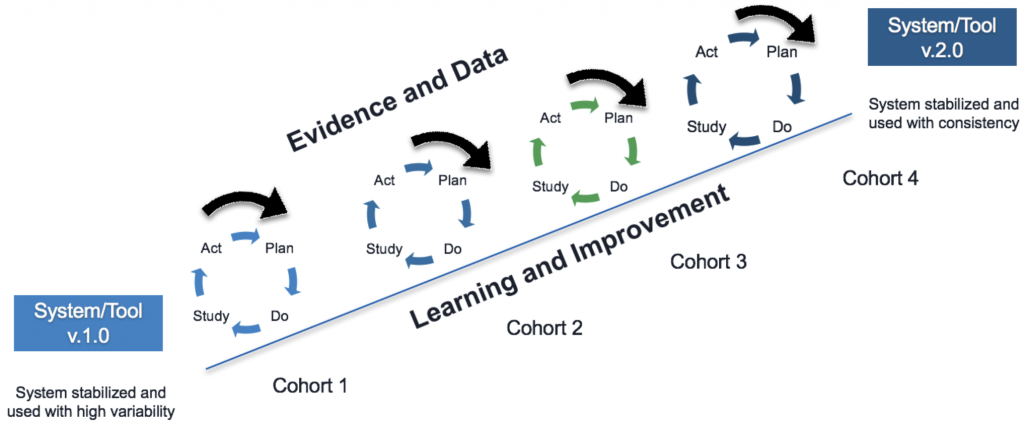
A Decision Support Data System alone will not improve outcomes. Success requires alignment between:
- Accurate and consistent data collection
- Clear routines and protocols
- Effective strategies for using data
- Ongoing reflection and improvement
So why all this work when you have a data system? When these elements work together, data becomes a powerful tool for change. According to EDPrep Partners (2025), “A data routine is not a dashboard. It’s not a spreadsheet review. And it’s not a one-time meeting. Data routines are the structured, recurring processes that help educator preparation programs monitor performance, identify trends, and take meaningful action.” As you reflect on your own system, you must ensure that your current practices are teachable and trainable, and the use of data is consistent and accurate. Decision-making must be actionable. The goal is not just to collect data, but to use it effectively to improve outcomes. By strengthening your protocols and over multiple cycles making them routine, you can increase both the efficiency and impact of your implementation efforts. This is not a one-time event. Continuous reflection of these elements leads to a cycle of improvement.
References
Bugnitz, C., & Sandberg, K. C. (2025). Creating effective PDSA cycles. Current Problems in Pediatric and Adolescent Health Care, 55(4), 101759. https://doi.org/10.1016/j.cppeds.2025.101759
EdPrep Partners. (2025, September 3). From data collection to daily practice: How strong data routines improve teacher preparation. https://www.edpreppartners.org/from-data-collection-to-daily-practice-how-strong-data-routines-improve-teacher-preparation
State Implementation and Scaling-up of Evidence-based Practices Center (SISEP) & National Implementation Research Network (NIRN). (2015). Improvement cycles overview. FPG Child Development Institute, University of North Carolina at Chapel Hill. https://implementation.fpg.unc.edu/resource/improvement-cycles-overview/